
The printing method you choose rarely comes up in a design brief. But it decides the cost, the quality, and whether your job lands on time or not. Choose wrong and a 500-piece brochure run costs you twice what it should. Choose right and the same job saves budget you can put back into the design.
The debate around digital printing vs offset printing is one most print buyers face at least once a season. Both methods produce professional results. They just do it differently, and the right choice depends entirely on your order size, timeline, colour requirements, and material.
Close-up Difference between Digital Vs Offset Printing
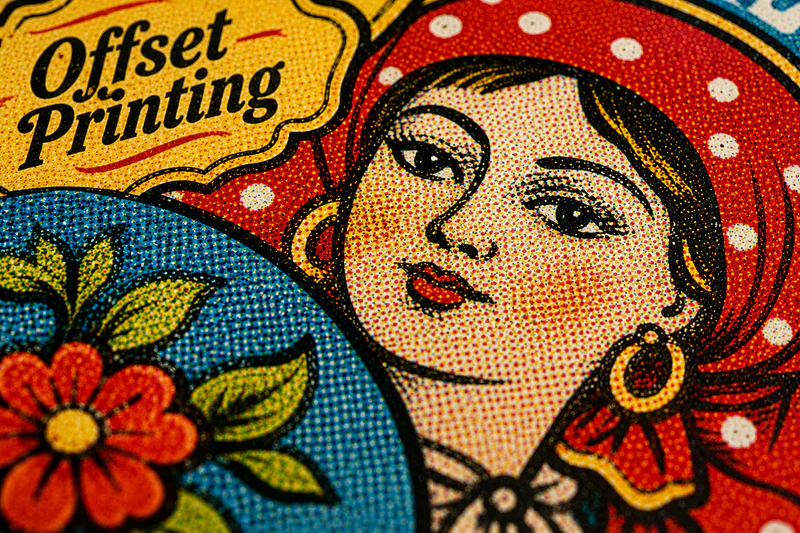

Digital printing sends a file directly to the press with no plates involved, making it ideal for short runs, fast turnarounds, and personalised jobs. Offset printing transfers ink from metal plates via a rubber blanket, making it the standard for high-volume work that demands exact colour accuracy and the lowest possible per-unit cost. This guide walks through every factor you need to evaluate before placing your next print order.
Key Takeaways
Digital printing has no setup cost and no minimum order, ideal for runs under 500 pieces.
Offset printing becomes more economical at 500 to 1,000 pieces and delivers superior colour accuracy.
Only digital supports variable data printing, names, barcodes, or custom content per piece.
Pantone colour matching is only reliable with offset. Digital approximates it.
Need it fast? Digital turnaround runs 2 to 5 working days for standard orders. Offset requires 10 to 14 working days.
Offset vs Digital Printing: A Full Comparison
Before going into detail on each method, here is how they stack up across the factors that matter most to print buyers.
What is Digital Printing?
Digital printing is a method that transfers a digital file directly onto paper or another substrate using inkjet or laser technology. There are no plates, no rubber blankets, and no setup process between your file and the finished print. Each piece can carry different content within the same run without slowing production.
How Digital printing works
Your file is sent from a computer directly to the press. Ink or toner is applied directly onto the surface in a single pass. Because the press reads the file fresh for each piece, variable data, different names, addresses, or codes on each print, is as straightforward as printing identical copies.
What is Digital Printing Used For?
Digital printing is the default for short-run jobs where speed and flexibility matter more than the lowest possible per-unit cost. Common applications include:
Business cards, flyers, brochures, and postcards in quantities under 500.
Personalised and variable data print jobs, direct mail, segmented campaigns, event passes.
On-demand printing with no minimum order.
Urgent jobs where a 10-to-14-working-day offset timeline is not an option.
What is Offset Printing?
Offset printing is a high-volume commercial printing method that transfers ink from metal plates to a rubber blanket, which then rolls the ink onto paper. Each colour in the design requires its own plate. The press runs all colour layers in sequence, building the final image with exceptional precision and consistency.
How Offset Printing Works?
The design is separated into colour channels and each channel is burned onto a separate metal plate. Ink is applied to the plate, transferred to a rubber blanket, and then pressed onto the substrate.
The standard process uses CMYK inks but also supports custom Pantone spot colours mixed to exact specifications. Once the press is set up and running, it produces consistent output across tens of thousands of pieces at a very low cost per unit.
What is Offset Printing Used For?
Offset is the standard for anything that needs to be produced in high volume with consistent, accurate colour. It handles a broader range of paper stocks and specialty substrates than digital. Common applications include:
Newspapers, magazines, books, and catalogues at high volume.
Business cards, stationery, and packaging where Pantone colour accuracy is non-negotiable.
Posters, book jackets, and premium marketing materials where quality must hold up at scale.
Any high-volume job where per-unit cost needs to come down as far as possible.
Digital Printing vs Offset Printing: The Key Differences
The difference between digital printing and offset printing comes down to five factors every print buyer should evaluate before placing an order.
Cost and Volume
Digital printing has no setup cost. Price per unit stays consistent regardless of quantity, which makes it cost-effective for small runs but relatively expensive at high volumes. Offset printing carries high upfront plate creation costs, but per-unit price drops sharply as volume increases.
The break-even point is typically 500 to 1,000 pieces for standard jobs, and 3,000 to 5,000 pieces for full CMYK work. For most businesses ordering stationery, marketing collateral, or branded print materials, the calculation is worth running both ways before committing.
Quick tip: if your order is under 500 pieces, digital is almost always cheaper. Over 1,000 pieces, run the numbers on both methods before deciding.
Turnaround Time
Digital printing runs on a 2-to-5-working-day turnaround for standard orders. It is the practical choice for urgent jobs or situations where offset's longer lead time is not workable. Offset printing adds 10 to 14 working days to the timeline because plates need to be created and the press needs to be set up before the first print comes off the line.
If speed is a priority, digital is the better option. If you have two or more weeks, offset becomes viable and the quality difference will be visible on the finished piece.
Colour Accuracy

Digital printing uses standard CMYK inks and produces excellent results for most everyday commercial print needs. It cannot exactly replicate all Pantone colours. Colours are approximated and may shift slightly across different print runs.
Offset printing supports exact Pantone colour matching using specially mixed inks. If your brand colour must be identical across every batch of business cards, letterheads, and brochures you ever print, offset is the only method that guarantees it.
Personalisation and Variable Data

Digital printing allows each piece in a run to carry different content, a name, a barcode, an address, or a custom code, without slowing production or adding cost. This is called variable data printing and it is only possible with digital.
Offset printing produces identical pieces across an entire run. For direct mail campaigns, personalised invitations, or segmented promotional materials, digital is the only option.
Material and substrate
Offset printing works on a broader range of materials than digital, coated and uncoated paper stocks, specialty papers, and plastics. For premium finishes like soft-touch coating or spot UV, offset has a clear advantage.
Digital printing options are improving but remain more limited on specialty materials. For standard coated and uncoated paper stocks, both methods work well. For anything outside the ordinary, check substrate compatibility with your printer before committing to a method.
Print Quality
Offset printing produces smoother colour transitions, finer detail, and more consistent output across large runs. The ink-on-rubber-on-paper transfer creates a quality ceiling that digital cannot currently match for the most demanding applications.
Digital printing is clean and sharp for most everyday commercial needs. Business cards, flyers, brochures, and internal documents all print well digitally. For premium publications, packaging, and brand materials where quality is non-negotiable, offset remains the preferred choice.
Advantages and Disadvantages of Digital Printing
Digital printing suits businesses and buyers who prioritise speed, flexibility, and manageable upfront costs. It is the default choice for short runs, personalised jobs, and anything with a tight deadline. Here is the full picture.
Advantages of Digital Printing
No setup cost and no minimum order quantity.
Faster turnaround, standard orders ship within 2 to 5 working days.
Each print in a run can be different, making it ideal for personalised or variable data jobs.
More affordable for low-volume orders where offset plate costs would be uneconomical.
Easy to make corrections or changes before or during the run without restarting from scratch.
Disadvantages of Digital Printing
Higher cost per unit at large volumes compared to offset.
Fewer material options, some specialty substrates are not supported by digital presses.
Cannot exactly match all Pantone colours, approximation only.
Marginally lower sharpness and colour consistency at very high quality thresholds.
Advantages and Disadvantages of Offset Printing

Offset printing suits buyers with time, volume, and quality requirements that justify the setup cost. It is the industry standard for high-volume commercial printing and remains the best choice when per-unit cost, colour accuracy, and print quality all matter. Here is the full picture.
Advantages of Offset Printing
Superior image quality - clean, sharp type and smooth colour transitions with no streaks or spots.
Best colour fidelity available - supports exact Pantone colour matching for brand-critical work.
Works on a wide range of paper stocks and select specialty substrates.
Significantly lower cost per unit at high volumes - the more you print, the better the economics.
Consistent output across very large runs - colour does not drift between the first and last piece.
Disadvantages of Offset Printing
High upfront setup cost for plate creation, which must be absorbed by the run.
Longer turnaround - plates need to be made before printing begins, typically 10 to 14 working days.
Not economical for small orders under 500 pieces.
Errors discovered after plate creation are costly to fix - the plates need to be remade.
Cannot produce variable data or personalised prints within a single run.
How to Choose Between Digital and Offset Printing
Run through these five questions before placing your order. Most print decisions can be made cleanly with the answers.
How many pieces do you need?
This is usually the deciding factor. Under 500 pieces, digital is almost always the more cost-effective choice because there is no setup cost to absorb. Between 500 and 1,000 pieces, run a cost comparison with both methods quoted at your quantity and colour count. Over 1,000 pieces, offset will typically deliver a lower cost per unit and better quality consistency across the run.
How quickly do you need it?
If you need the job within a week, digital is the practical choice. Standard digital orders ship within 2 to 5 working days. Offset requires 10 to 14 working days from file approval for plate creation and press setup. If you have two or more weeks, offset is viable and the quality will likely justify the wait for premium jobs.
How critical is colour accuracy?
If your brand has a specified Pantone colour that must match exactly across every piece you print, offset is the only reliable method. Digital approximates Pantone colours and the result may vary slightly between runs. For standard four-colour work where close is good enough, digital will serve you well.
Do you need personalisation?
If you need each printed piece to carry different content , names, addresses, barcodes, or custom codes , digital is the only option. Variable data printing is not possible with offset. If all pieces in the run are identical, either method works and the decision comes down to volume and quality.
What are you printing on?
For standard coated and uncoated paper stocks, both methods work well and the choice comes down to volume and timeline. For specialty papers or premium finishes like soft-touch coating or spot UV, offset has a broader comfort zone. Check substrate compatibility with your printer before committing to digital for anything outside the ordinary.
What to Use Each Method For (By Product Type)
Business cards

For Small runs or fast turnaround, digital is the practical choice. For premium business cards where a specific brand colour must match exactly or where specialty finishes like spot UV or soft-touch lamination are required, offset delivers a noticeably better result. If you are ordering branded visiting cards for your entire team in bulk, offset gives you better per-unit economics and colour consistency across the run.
Brochures and Catalogues

For Under 500 copies, digital is recommended but over 500 copies with consistent brand colour across every piece, offset is recommended. For product catalogues distributed at trade shows or sent to clients, the quality difference between offset and digital is visible when held side by side. Offset produces cleaner text, smoother photography reproduction, and more consistent colour across the run.
Posters
High-detail, colour-critical pieces where the quality of the printed output is itself part of the impression, offset is preferred. The finer detail and smoother colour transitions that offset delivers are particularly noticeable on large-format pieces viewed at close range.
Postcards and Flyers
Low volume or personalised campaigns, digital is preferred. Bulk campaigns of 1,000 pieces or more where every piece is identical offset is preferred brings the per-unit cost down. For festive season mailers or event invitations where some personalisation is needed, digital handles the variable data without any additional complexity.
Packaging
Short runs or test batches where you need to check the design before committing to production, digital is preferred. Full production runs with premium finishes like soft-touch coating or spot UV on specialty board, offset is the standard. The broader substrate range and higher quality ceiling of offset make it the default for packaging that needs to hold up on a shelf.
Newsletters and internal publications
High volume, consistent output across hundreds or thousands of copies, offset is the more economical choice at scale. For smaller internal runs where personalisation or frequent content changes are needed, digital handles the job without the overhead of plate setup.
Is Digital or Offset Printing Right for You?

Choose Digital Printing if
Your order is under 500 pieces.
You need the job within a week - standard digital orders ship in 2 to 5 working days.
Your design requires personalisation or variable data per piece.
You want no minimum order and no upfront setup cost.
You need to make changes easily before or during the run.
Choose Offset Printing if
Your order is over 500 pieces.
Exact Pantone colour matching is required for brand-critical work.
You are printing on specialty paper stocks or need premium finishes like soft-touch coating or spot UV.
You need the highest possible print quality for premium materials.
You have 10 to 14 working days for plate creation and press setup.
Conclusion
Digital printing is built for speed, flexibility, and short runs. No setup, no minimum order. It handles variable data, corrects easily, and ships within a few working days. Offset printing is built for volume, colour precision, and quality at scale. The more you print, the more the economics improve, and the quality ceiling is higher than digital can currently match.
Volume and timeline decide the method in most cases. Colour accuracy and substrate requirements are the tiebreakers. When in doubt, ask your printer to quote both options at your required quantity , the numbers usually make the decision obvious.